
Sumner County VINELink Coverage
Kansas Victim Information and Notification Everyday, called VINE, is free, confidential, voluntary, and available around the clock. The Kansas Attorney General states that its custody search and notifications cover people held in county jails. The service expressly excludes KDOC state-prison offenders. That boundary matters because a statewide name can sound broader than the actual data feed.
The Sumner County Sheriff reports that jail custody information is sent to VINE every 15 minutes. This is an agency feed cadence, not a promise that every screen or alert appears at an exact second. Use VINELink for a named Sumner County jail detainee. Use KASPER for a person committed to KDOC, the BOP locator after federal commitment, and ICE ODLS only when an immigration handoff is documented or plausible.
Search Sumner County VINELink
The strongest search begins while the person is still shown in custody. Compare the VINE match with known identity details and the Sheriff’s live roster. A same-name result can identify someone else. The local roster can provide a booking number, charges, arresting agency, and booking time, but it is current-only and does not show a released tab.
- Open VINELink and select Kansas.
- Enter the person’s name and any available identifiers.
- Compare the match with booking or case details.
- Open the matching custody record and read the current status.
- If the person is still held, choose the available notification options.
The official VINELink interface is the source for current screen labels.
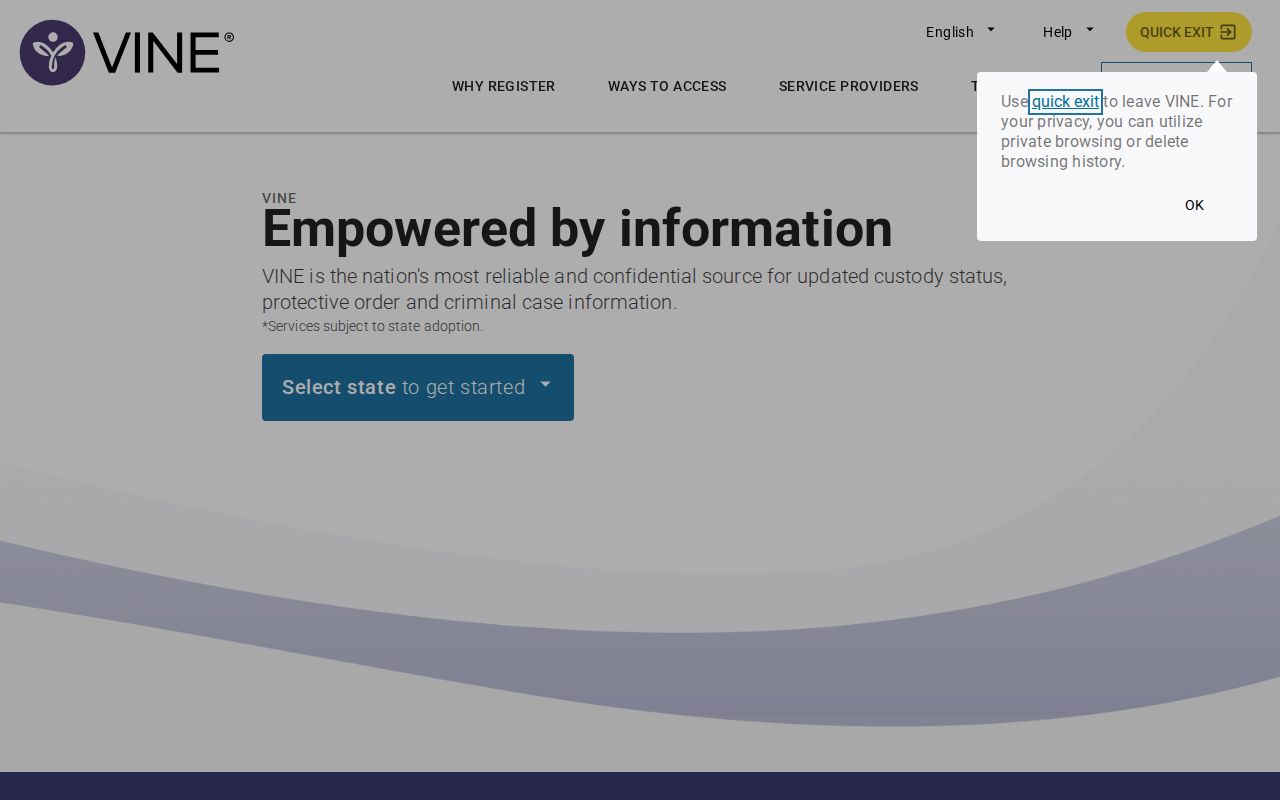
This captured search screen supports the Kansas lookup path. It does not supply a safe example of historical released-result wording, so no exact phrase is invented here.
Sumner County VINE Fields
VINE is designed for one-person custody status and alerts. It should not be read as a full booking or court file. The research supports current identity matching, custody status, participating location, and registration for specified custody changes. Exact fields can vary with the current interface.
| Item | What it can establish |
|---|---|
| Identity details | Help separate people with similar names |
| Custody status | Reports the participating jail’s current status |
| Facility or agency | Identifies the reporting custody source when displayed |
| Release alert | Reports a release event from the jail feed |
| Transfer alert | Warns that custody may continue elsewhere |
| Escape alert | Reports escape, which is not a lawful release |
A VINE release notice does not necessarily give the release reason, court authority, detainer outcome, or later arrest. Preserve the notice and time. Then check the court case or request the objective release fields from the correct custodian.
Register Sumner County Alerts
Registration is available when the matching person is in custody. Current Kansas materials identify phone, email, text, and in-app options. Available choices should be taken from the live screen. A person already released may no longer offer registration, so early enrollment matters.
- Open the correct custody record.
- Select the available method for notice.
- For telephone notice, create a four-digit PIN.
- When a call arrives, hear the message, enter the PIN, then press the pound key.
- Save the alert and verify whether it says release, transfer, or escape.
Acknowledging a phone call with the PIN stops repeat calls. Email registration does not use a PIN and sends a custody-change message. Keep a PIN private, but choose one the registrant can recall.
Fifteen-Minute Sumner Updates
Sumner County’s documented 15-minute feed is a useful local layer. It makes VINE more timely for a named detainee than an invented recent-release list. The Sheriff publishes no official 24-hour or 72-hour released-person feed, and its current roster has no release date, reason, archive, or destination field.
The Sheriff Detentions page documents both the VINE cadence and the local statement that information may not be released after the inmate leaves custody.
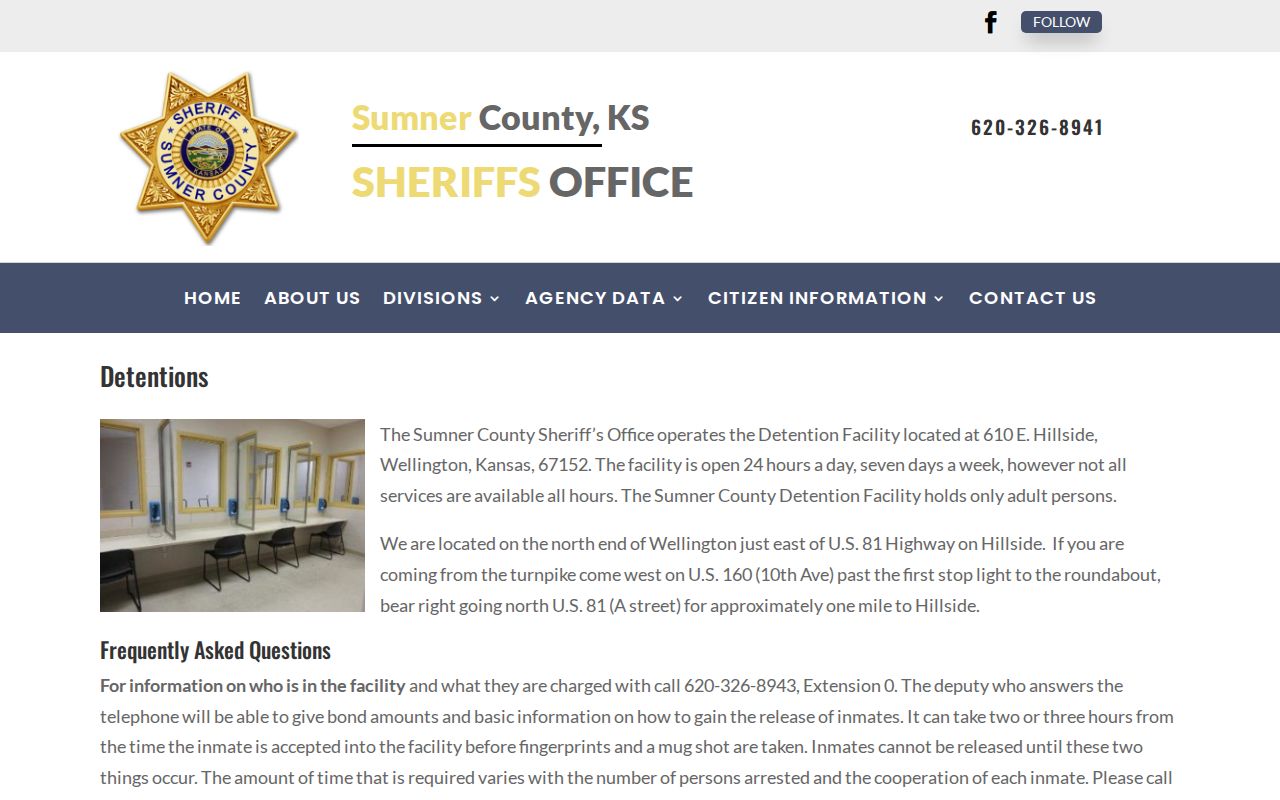
This local policy makes VINE, the court record, and a narrow records request the appropriate fallback chain. A roster disappearance alone cannot show whether the person bonded out, transferred, entered KDOC, remained in federal custody, or experienced another event.
Confirm Sumner County Release
First classify the custody system. For a local jail case, compare the alert with the Kansas court disposition. A bond or dismissal order can explain legal authority but may precede actual processing, and another hold may prevent community release. A transfer alert affirmatively warns that the person may remain confined.
For a state-prison case, use the KASPER offender search. It can show state custody, parole, community corrections, or discharge, and its movement history can clarify whether prison custody changed. For a projected prison date, use the Release Date Lookup process. Federal post-commitment cases belong in BOP, while USMS pretrial custody often requires the federal docket because USMS has no comparable public historical locator.
Call Kansas VINE at 1-866-574-8463 or TTY 1-866-847-1298 for service assistance. For the local jail, the published number is 620-326-8943. The jail may limit post-release information, so ask for a narrow, segregable record and do not assume a response is guaranteed.
Read Negative Results Carefully
No VINE result is weak negative evidence. It can reflect matching problems, current status, system coverage, or a person who has already left the participating jail. It does not prove that the person remains jailed, was released to the community, or was never booked.
- Release
- A custody-change event that may mean community return, but still needs legal and destination context.
- Transfer
- Movement to another custodian or facility, not freedom from custody.
- Escape
- An unauthorized departure and not a release.
- Discharge
- Completion of a corrections obligation, verified through the responsible agency rather than VINE.
The most reliable conclusion comes from positive status or date evidence. Reconcile the VINE notice, court journal entry, agency record, and receiving system where a transfer occurred.
Identity errors deserve special care. Search common names with any known middle name, age, booking number, charge context, and arresting agency. If VINE and the Sheriff roster appear to identify different people, do not merge the records. The Kansas court portal can add a case number and disposition, but a same-name court result also needs verification. Record when each system was checked because they do not update on the same schedule.
A local departure can take several forms. Bond, own-recognizance release, dismissal, time served, probation, transfer to KDOC, movement under USMS authority, and an immigration handoff have different consequences. Only some mean a return to the community. VINE’s event label is one piece of that chain. When an alert says transfer, seek the receiving agency rather than reporting a release.
Kansas VINE does not become a historical archive after custody ends. If registration is no longer available, use the saved alert, court journal entry, and a narrow request for the release date, time, type, authority, destination, and holds. The Sheriff’s published post-release cutoff means production cannot be promised. Ask for the least broad segregable record and accept that a lawful restriction may limit the response.
The KBI Registered Offender Registry is not a substitute. It covers only people with a legal duty to register and may reflect a community, custody, or compliance status. Most released people have no registration duty. Likewise, a no-hit cannot prove continued detention. Use that registry only when its narrow legal coverage is relevant and read the displayed status and verification date literally.
When a court record is needed, begin with a known case number when possible. Compare the roster charge, booking date, and arresting agency with the docket. A filed journal entry is often stronger than the portal summary. If the document is not online, a Kansas district-court public terminal or focused court-record request may provide access to a public filing. Sealed, expunged, juvenile, and other restricted records remain outside ordinary public access.
Sumner County cases can also split by court. Wellington Municipal Court handles city-ordinance matters, while state-law criminal cases belong in Sumner District Court. The correct disposition may explain why custody changed, but it still may not record the jail-door time. A release order can precede processing. Compare the legal order with the VINE event and the agency record before fixing an exact date.