
Sumner County Supervision Types
Parole and probation do not prove the same event. Parole places a person outside prison while KDOC authority continues. Kansas also uses postrelease supervision for many determinate sentences. Probation is a court sentence served in the community, often without a prior state-prison term. Sumner County Community Corrections is the local channel for known community-corrections cases, but its directory entry does not mean that every released Sumner County person is supervised.
A fourth term matters: discharge. Discharge means the corrections or supervision obligation ended. It is later than the jail-door date and should not be confused with release from the Sumner County Detention Facility. KASPER may display Inmate, Parole, Community Corr., or Discharged, among other statuses. Read the exact status and movement history instead of treating any search hit as proof of current parole.
| Type | Who orders or manages it | Best verification |
|---|---|---|
| Parole or postrelease | KDOC and its parole services | KASPER, then Wichita Parole Office |
| Probation or community corrections | Court and local community corrections | Court order and Sumner County Community Corrections |
| Discharge | KDOC or the supervising authority | KASPER status or formal discharge record |
Verify Sumner County Supervision
Start with the custody path, not a broad name search. A person who served only in the county jail may never appear in KASPER. A person sentenced to the Secretary of Corrections may appear there as incarcerated, supervised after incarceration, or discharged. KASPER covers covered Kansas corrections cases since 1980, but it is not a complete criminal-history file. Newer community-corrections events after April 21, 2021 may also be missing during KDOC data modernization.
- Open the KASPER search disclaimer and accept its terms.
- Search by KDOC number when known. Otherwise use name, alias, birth details, conviction county, or supervision county.
- Read status, movement dates, type of community release, and the listed parole office together.
- For parole or postrelease, confirm current details with the Wichita Parole Office because KASPER updates on working days.
- For a known local probation case, use the court order and contact Sumner County Community Corrections.
“Conviction County: Sumner” and “Parole Supervision County: Sumner County” answer different questions. Neither field alone establishes where a person lives. If KASPER has no match, check spelling, aliases, and identifiers, then consider whether the case was county-only. The released-inmate search path connects jail, court, VINE, and KDOC records without overreading a negative result.
The official KDOC parole-office directory shows the office routing used for Sumner County supervision.
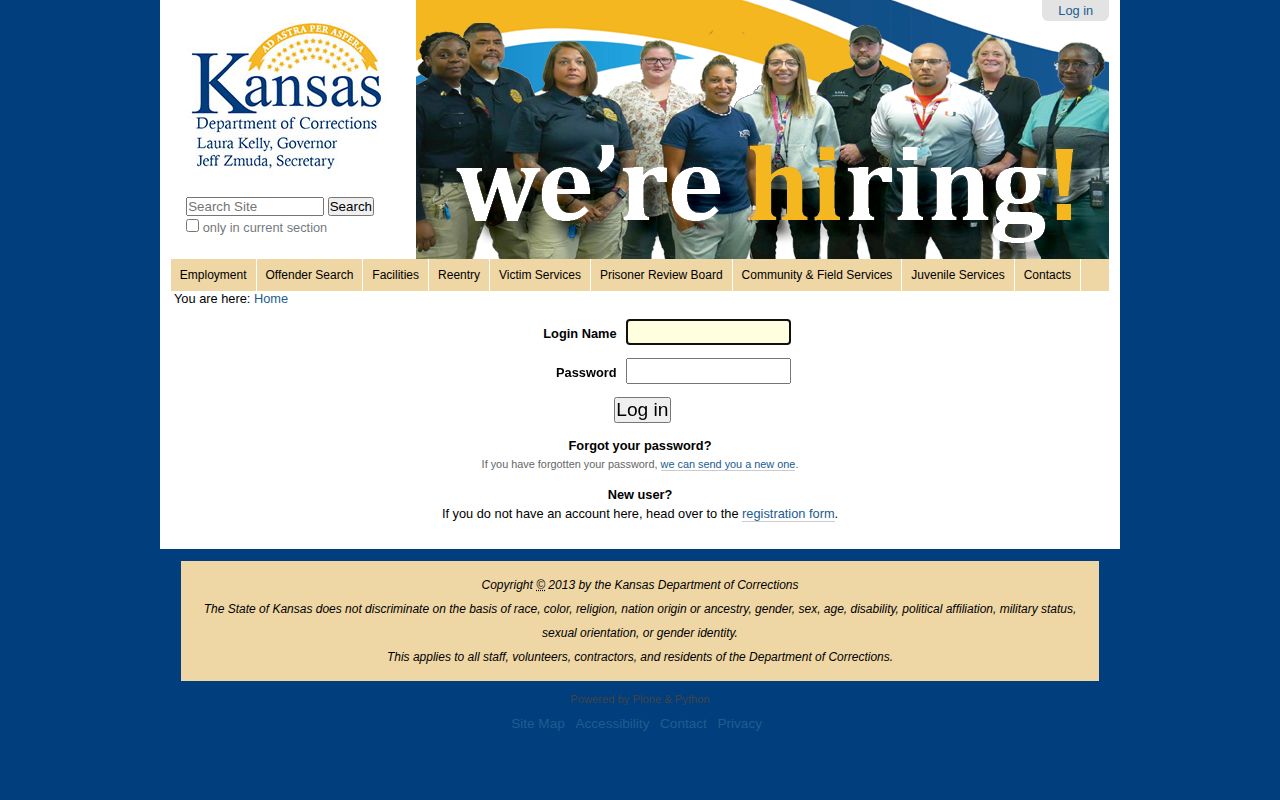
This directory is the better source for current office contact than a copied address on an old third-party page.
Sumner County Supervision Offices
KDOC assigns Sumner County parole matters to the Wichita Parole Office. Community Corrections in Wellington handles the distinct local channel. Call with the person’s full name and identifying case or KDOC number when available. Staff may limit information, and an office response should be read alongside the actual court or corrections record.
212 S. Market St.
Wichita, KS 67202
316-262-5127
Automated reporting: 866-570-7225
120 E. 9th St.
Wellington, KS 67152
620-326-8959
Fax: 620-326-5576
- Parole
- Community placement under continuing corrections authority, generally tied to an eligible prison sentence.
- Postrelease supervision
- A period of oversight after prison in many determinate Kansas cases.
- Probation
- A court-ordered community sentence that is distinct from parole.
- Absconder
- A person alleged to have stopped required contact with a supervising agency.
- Discharge
- Formal completion of the corrections or supervision obligation.
Sumner County Parole Hearings
The Kansas Prisoner Review Board handles discretionary parole for old-law and indeterminate cases. Many determinate guideline cases instead move to postrelease supervision through sentence calculation. A physical release date, parole eligibility date, parole decision, and supervision discharge date are four separate milestones.
The Board’s monthly public-comment and hearing lists identify a hearing month, earliest possible release month, KDOC number, conviction county, case number, offense, and facility grouping. The listed county is the county of conviction, not necessarily a planned return address. Dates on a monthly list change, so use the live list.

The list shows upcoming process, not a person-level decision database. KDOC defines “Parole” as a favorable outcome subject to later planning and conditions, “Continue” as postponed action, and “Pass” as denial for a stated period. No public searchable database of individual Board decisions was located. Later status should be checked through KASPER or requested from the Board.
Sumner County Absconder Checks
Kansas maintains separate searches for parole absconders and community-corrections absconders. The Sumner County Sheriff also maintains a separate warrant search. These systems are not interchangeable. An absconder entry reflects an alleged failure to remain in contact with supervision; it is not a general release list or self-executing warrant confirmation.
Use the KASPER parole absconder search for parole and the community-corrections absconder search for that supervision stream. KDOC says its data updates on working days and warns against taking enforcement action from the site alone. For current verification, contact law enforcement or KDOC Enforcement, Apprehensions and Investigations at 785-414-7755.
The Sheriff warrant search is a third, local source.
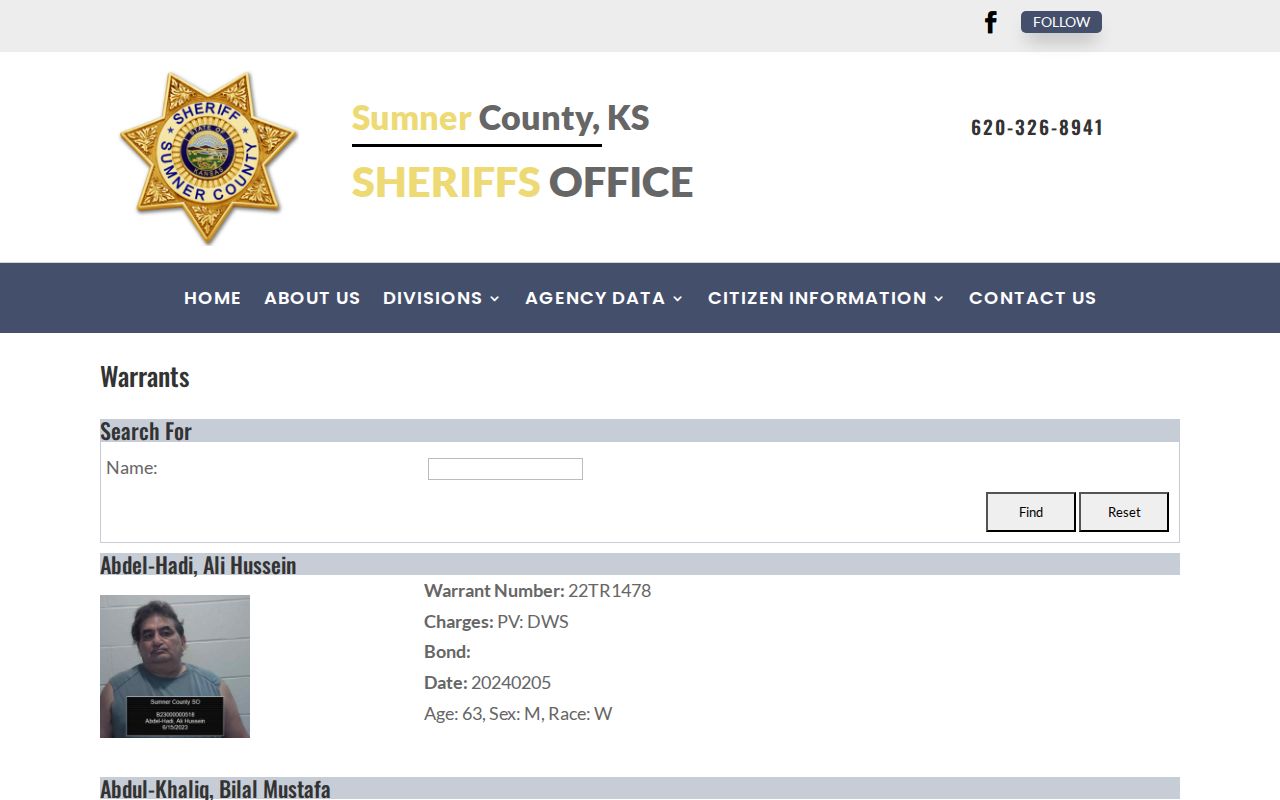
A hit should be confirmed with the agency. No result does not prove successful completion or discharge.
Work Release Is Still Custody
Sumner County’s work-release program is locally distinctive. It requires court authorization and Sheriff approval, has exclusion rules, requires self-transport, and lists a $20 fee for each workday. A participant may leave for approved work, but still remains in custody. Work release is therefore not parole, probation, or proof of discharge.
The official work-release application is the source for program terms. A roster absence or work schedule should never be used to infer final release. Confirm the court order and the Sheriff’s custody record.
Correct Sumner County Records
Property and record questions follow separate paths. During custody, the Sheriff says property or funds may be released once at the inmate’s request to a recipient with photo identification. Property refused at intake may stay with the arresting agency. Those rules do not establish what happens at final release, and no universal local final-property procedure was found.
For an error in a KASPER record, KDOC accepts written correction contact at kdoc_pub@ks.gov. Questions about sentence calculations go to KDOC Sentence Computation at 785-296-3317. A disagreement about a court-ordered term should also be checked against the judgment and journal entry. Supervision ends through formal discharge, not merely because a name is absent from an absconder list.
Conditions and alleged violations also belong to the correct authority. A parole condition comes through KDOC and the Prisoner Review Board process. A probation condition comes from the sentencing court and may be administered through Community Corrections. A violation allegation does not itself prove revocation. Check the docket for the filed motion, hearing, and final order, then compare that result with current KASPER status or the supervising office. A revocation can return a person to custody and change later sentence dates.
Completion needs positive evidence. A person may stop appearing on an active supervision list because data changed, a name was entered differently, jurisdiction moved, or the obligation ended. Ask for the discharge date or document when the end of supervision is the point that matters. KASPER names can remain public unless a conviction is reversed, expunged, or removed through executive clemency, so continued database presence does not necessarily mean active supervision.
For a court case, the journal entry is stronger than a summary label. It can show the probation term, conditions, revocation, modification, or discharge. Sumner County is in the 30th Judicial District. Wellington Municipal Court handles city-ordinance matters, while state criminal cases belong in district court. Match the arresting agency and case number before deciding which court record controls.